
The part of the Adriatic Sea belonging to Croatia is widely regarded as an excellent diving area, attracting underwater enthusiasts every year.
Famous French oceanographer and adventurer Jacques-Yves Cousteau is often said to have described the underwater world around Dubrovnik as one of the most beautiful he had seen during his expeditions.
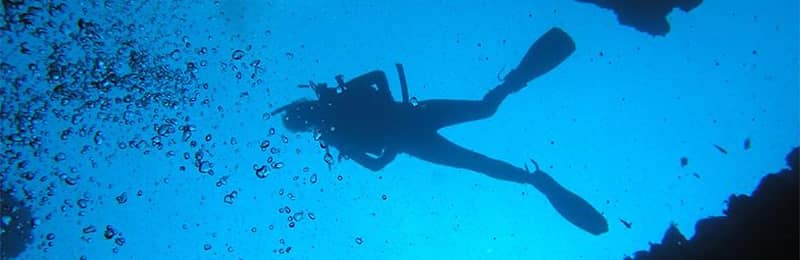
Try Scuba Diving Discovery in Dubrovnik
Explore the wonders of scuba diving in Dubrovnik and discover a whole new world beneath the waves!
Join our expert instructors for your first scuba adventure in the crystal-clear Adriatic Sea. In a safe setting, you'll learn the basics - from using equipment to underwater navigation and communication. Your instructor will be with you every step, ensuring your dive is both safe and enjoyable. Discover a vibrant underwater world teeming with groupers, octopuses, and rockfishes, while our Poseidon statue provides the perfect backdrop for underwater photos.
Diving conditions in Dubrovnik
Dubrovnik offers generally calm sea, mild currents and very good visibility, which often reaches 15–20 metres or more around the islands and rocky coast. Water temperatures are coolest in spring and late autumn and warmest in July and August, when many divers are comfortable in a 5 mm wetsuit for recreational depths. For current sea and air temperatures, check the weather in Dubrovnik before planning your dives.
- Diving season typically runs from late spring to autumn, with the most popular months from June to September.
- Visibility is usually good thanks to rocky and pebbly seabeds rather than sand, which means clearer water for wrecks, walls and caves.
- Sites range from shallow sheltered bays suitable for first dives to deeper walls and wrecks for experienced and technical divers.
- Most visitors dive with local centres, which provide boats, guides, rental equipment and advice on daily sea conditions.
Why dive in Dubrovnik
Diving in Dubrovnik combines easy access from the city with interesting and varied underwater terrain. Within short boat rides you can reach walls, reefs, caves and several wrecks, so it is possible to fit serious diving into a city break or a longer holiday by the sea.
- Different types of sites in a compact area, from sheltered shallow bays for first dives to deeper walls and wrecks for experienced divers.
- Rocky seabed and limited sand mean clearer water and good visibility at many locations.
- Dive boats usually leave from the city or nearby bays, so transfers are short and you spend more time in the water than travelling.
- Several local dive centres offer guided dives, equipment rental and courses, making it easy for both beginners and certified divers to join.
- Diving can be combined with visits to the nearby Elaphiti islands such as Lopud, Šipan, the island of Koločep, Mljet or beaches on non diving days.
Best time to dive in Dubrovnik
The main diving season in Dubrovnik runs from late spring to early autumn, when sea temperatures are more comfortable and visibility is generally at its best. Most dive centres operate daily trips from May to October, with July and August being the warmest and busiest months.
- Late spring (May–June): Cooler water but good visibility and fewer crowds.
- Summer (July–August): Warmest conditions and the most frequent boat departures.
- Early autumn (September–October): Stable weather, clear water and milder surface temperatures.
- Off season: Limited operations; conditions depend on weather and availability of dive centres.
Weather patterns can change quickly along the coast, so checking the weather in Dubrovnik before booking or heading out is recommended.
Try scuba diving discovery in Dubrovnik
First time divers can join an introductory discovery dive, a simple and supervised experience designed to let beginners try scuba in calm, shallow conditions. Local instructors provide the equipment, explain the basics and guide you through the entire dive, making it a safe way to see Dubrovnik’s underwater scenery for the first time.
- No prior experience required and suitable for most adults and older teenagers.
- Usually starts with a short briefing on equipment and underwater communication.
- Initial practice in shallow water before continuing to a nearby sheltered site.
- All equipment is supplied by the dive centre.
Discovery dives run daily in the main season and are organised by local diving centres in Dubrovnik, including well known operators such as Abyss at the Valamar Dubrovnik President Hotel and Blue Planet at the Hotel Dubrovnik Palace.
Who is diving in Dubrovnik for?
Diving in Dubrovnik works well for a wide range of visitors, from complete beginners to experienced divers who come specifically for wrecks and deeper walls. Most local dive centres run small groups and can suggest suitable sites based on your experience, comfort level and recent number of dives.
- First time divers can book a supervised discovery dive with an instructor in sheltered, shallow areas close to the shore or nearby islands.
- Certified recreational divers (for example with Open Water or Advanced certificates) can join daily boat dives to popular reefs, walls and moderate depth wrecks.
- Experienced and technical divers can arrange deeper and more demanding dives such as wrecks with stronger currents or greater depths, usually on request with local centres.
- Non divers and mixed groups can still join boat trips, snorkel in clear bays or enjoy time on the islands while others are diving.
Diving regulations, permits and safety
Diving in Croatia is regulated to protect underwater sites, marine life and historic wrecks. Local diving centres handle most of the formalities for guided dives, but independent diving is limited and requires meeting specific conditions. Before planning any diving on your own, check the current rules with the Harbour Master’s Office in Dubrovnik or a licensed centre.
Controlled and off limit diving zones
Not all areas around Dubrovnik are open for diving. Certain zones are controlled or completely off limits due to protected habitats, archaeological sites or busy maritime traffic. Divers joining organised trips do not need to handle this themselves, as licensed diving centres plan routes according to current restrictions.
Independent divers must hold a valid diving license. It is recommended to obtain it before arrival because it can speed up the start of your trip. Licenses are issued by the Croatian Divers Association and can be purchased through registered diving clubs, centres or authorised tourist agencies along the Adriatic coast.
- Some wrecks and archaeological locations require special approval and may only be visited with authorised guides.
- Harbour entrances, shipping lanes and marked protected areas are not permitted for independent diving.
- Diving centres are informed about temporary or seasonal restrictions and adjust daily plans accordingly.
In case of a diving accident call the Association for Rescue and Search at Sea.
9155 DAN, VHF channels 16, 10, 7, MRCC 24/7 phone: (+385 1) 195
Emergency and safety contacts for divers
All divers should know the main emergency contacts before entering the water. Local diving centres provide briefings and safety procedures, but it is still recommended to keep key numbers accessible, especially when planning independent dives or exploring remote areas by boat.
- Association for Rescue and Search at Sea (SAR): 9155
- DAN emergency line: 9155 DAN
- VHF radio channels: 16, 10, 7
- MRCC (Maritime Rescue Coordination Centre), available 24/7: (+385 1) 195
If diving with a centre, the crew and instructors manage communication and emergency protocols. Independent divers must ensure they have working communication equipment, knowledge of procedures and awareness of local conditions.
Off-limits diving zones
Off-limits diving zones include national parks (Brijuni and Krka), parts of the inner waters which include harbors, entrances to harbors, anchorages, areas of dense traffic, nature reserves (the Ston bay, the Lim channel, Nature park Telašica) and the sea area within a radius of 100 meters around anchored warships and guarded military objects. The Ministry of culture, through the local museums, issues the licenses to dive in these areas.
Additional information can be obtained at this number: +385 1 6116 848, Fax: +385 1 6116 849
Controlled diving zones
Some areas near Dubrovnik have been identified as controlled diving zones, including parts the national park of Mljet. The second national park classified as a controlled diving zone is the national park of Kornati. The respective national park management is responsible for issuing the proper licenses to divers interested in diving in these areas. With the previous consent of the local offices of the Ministry of Culture, one can dive in the following areas: the islands of Vis, Biševo, Svetac, Brusnik, Sušac, Kopište, Lastovo, Donji Škoji, Vrhovnjaci, Palagruža, and the sea belt of 300 m around the islands of Mljet and Jabuka, the area in the radius of 300 m around the sunken boats Szent Istvan, Premuda, Coriolanus Novigrad, BaronGautsch, Saint Ivan, S-57 on Pelješac, and on the findings near Žirje and Cavtat.
Underwater recording, photographing and researching archeological locations can be made only with special permission of the Ministry of Culture. In the Republic of Croatia the Ministry of Education and Sports has registered the following diving schools and certificates: BSAC, CMAS, IANTD NAUI, PADI, and SSI.
Obtaining a diving license in Croatia
A valid diving license is required for independent diving in Croatia. Most visitors who plan to dive recreationally choose guided dives with local centres, where licenses and permissions are handled on their behalf. Those who intend to dive independently must arrange the license before entering the water and follow all rules set by the Harbour Master’s Office.
- Licenses are issued by the Croatian Divers Association.
- They can be obtained through registered diving clubs, centres or authorised tourist agencies along the Adriatic coast.
- A certification card from a recognised diving organisation is required when applying.
- The license is valid for a limited period and must be carried during dives.
For most travellers, diving with a local centre remains the simplest and safest option, as equipment, guidance, boat access and local regulations are all handled by the operator.
Top diving locations around Dubrovnik
The Dubrovnik area offers a mix of wrecks, reefs, caves and vertical walls suitable for different levels of experience. Most dive sites are reached by short boat rides from the city or nearby bays, making it easy to plan single or double dives during your stay.
S 57 torpedo boat
The S 57 was a German fast torpedo boat (Schnellboot) from the Second World War, sunk in August 1944 after a battle with British motor torpedo boats and deliberate scuttling off the Pelješac peninsula. Today the wreck is one of the best known in the southern Adriatic and is legally protected, so diving is only allowed with authorised diving centres and without entering the interior.
The wreck, around 30 meters long, lies on its side on a sandy slope, with the bow shallower and the stern reaching close to 40 meters. The steel structure is very well preserved, while most of the wooden parts have disappeared, so divers can clearly see many details from the outside. You can still recognise the torpedo tubes in the bow area, parts of the engines and an anti aircraft gun on its mount, all covered in sponges and surrounded by schools of fish, conger eels and other typical Adriatic marine life.
- Protected wreck that can only be visited with a licensed dive centre and guide.
- Very good overall condition for its age, with many original metal details still visible.
- No wreck penetration recommended due to depth, protection status and safety considerations.
Location: Pelješac peninsula, S 57 torpedo boat
Depth: 25 - 39 meters
Experience needed: advanced categories
Attractions: very well preserved wreck of a German Second World War torpedo boat with visible torpedo tubes, gun mount and rich marine life
Taranto wreck, Dubrovnik
The Taranto was an Italian merchant ship that sank in 1943 after striking an Allied mine near Dubrovnik. Today it is one of the most visited wrecks in the area, known for its dramatic position and the wide spread of cargo remains around the site. The wreck is protected, and dives are carried out only with licensed centres.
The ship rests broken in two sections: the stern lies deeper and partly embedded in the seabed, while the bow is tilted at roughly 45 degrees against an underwater wall. Around the wreck you can still see parts of the cargo, including machinery elements, engines and tractor remains scattered across the slope. Metal surfaces are covered in sponges and soft corals, and the site attracts dense schools of smaller fish along with larger species such as sea bass.
- Popular wreck close to Dubrovnik, reachable by short boat ride.
- Dramatic bow angle and clearly visible cargo remains.
- Depth increases quickly, so good air and buoyancy management are essential.
Location: Taranto wreck, Dubrovnik
Depth: 23 - 55 meters
Experience needed: advanced categories
Attractions: well preserved wreck of an Italian merchant ship with visible cargo remains and rich marine life
Elafiti, St. Andrija
St. Andrija is a small, pine covered islet in the Elafiti archipelago, marked by a lighthouse built in 1873. It lies roughly 6 miles west of Dubrovnik and only a few miles from Koločep, Lopud and Šipan. The island is uninhabited apart from the lighthouse building, which contains two rentable apartments and serves as a landmark for boats approaching the outer Elafiti area.
The outer side of St. Andrija is considered one of the most impressive wall dives near Dubrovnik. The vertical cliff begins in just a few metres of water and drops almost straight down to more than 70 metres, offering different profiles for various experience levels. Along the wall you can see sponges, gorgonians and large schools of fish, and at around 26 metres there is a small underwater cave that is accessible within recreational limits. Very experienced or technical divers who descend past 50 metres may encounter red coral (Corallium rubrum), traditionally used in local jewellery.
- Suitable for beginners in the shallow upper section and for advanced divers along the deeper wall.
- One of the most scenic wall dives in the Elafiti Islands.
- Short boat ride from Dubrovnik, usually visited on two dive day trips.
Location: Elafiti, St. Andrija
Depth: 3 - 78 meters
Experience needed: beginner to advanced
Attractions: magnificent underwater wall with a small cave and rich marine life
Other notable dive sites near Dubrovnik
Besides the well known wrecks and St. Andrija wall, local diving centres also visit several other sites around Dubrovnik that offer a mix of caves, walls and reefs for different levels of experience.
- Cape Bezdan, Koločep: Located off the island of Koločep, this site offers a steep slope that drops into deeper water, with parts of a small wreck and a cave section. Depths range from shallow areas to around 40 meters, allowing routes suitable for both beginner and more advanced divers.
- Mala Afrika (Little Africa): A house reef between the mainland and the islets of Grebeni, known for sandy patches, rocky reef and a small cave. Typical depths range from about 5 to 30–40 meters, with rich marine life such as octopus, moray eels, scorpion fish and dense schools of smaller fish.
- Grebeni reef and caverns: Located close to Dubrovnik, the Grebeni rocks feature clear water, rocky formations and small caverns. Depths range from a few metres down to around 40 metres, making it suitable for mixed-experience groups on different routes.
- Maro’s Cave: A cave site near the Blue Planet diving centre, suitable for experienced divers. Access involves following the reef and entering a narrow opening leading into the cave, requiring good buoyancy control and comfort in overhead environments.
- Lokrum Island walls: Around Lokrum Island there are several wall and reef dives with depths from shallow plateaus to around 30–40 metres. The combination of drop offs, rock formations and small caves makes this area a regular stop on local dive boats.
- Bobara, Mrkan and nearby islets: South of Dubrovnik and near Cavtat, these smaller islands offer gentler reefs, slopes and walls that are well suited for relaxed dives or the second dive of the day, usually within recreational depth limits.
The site chosen on a given day depends on sea conditions, experience level and visibility, so diving centres usually confirm locations shortly before departure.
Diving centers and schools
Several licensed diving centres operate in and around Dubrovnik, offering guided dives, discovery programs, courses and equipment rental. Most run daily boat trips during the main season and can recommend suitable sites based on your certification level and recent experience.
Diving centers in Dubrovnik
Dubrovnik has several established diving centers that offer guided boat dives, discovery dives for beginners and a full range of recreational and advanced courses. They provide equipment rental, local knowledge of local conditions and access to the most popular sites around the city and the Elafiti Islands.
- Blue Planet Diving: Based at the Hotel Dubrovnik Palace, Blue Planet offers daily boat dives, discovery programs and training courses. Its position near the Grebeni islets provides fast access to reefs, wall dives and sheltered sites suitable for beginners and certified divers.
Diving Center Blue Planet
Masarykov put 20, 20000 Dubrovnik
mob: +385 (0)91 899 0 973
email:
web: www.blueplanet-diving.com
- Abyss Diving: Operating from the Valamar Dubrovnik President Hotel on the Lapad peninsula, Abyss offers boat dives, introductory programs and certification courses, with easy access to sites around Koločep, Grebeni and deeper open-sea walls.
Abyss Diving & Water Sports Centre
Valamar Dubrovnik President Hotel, Iva Dulčića 15, 20000 Dubrovnik
mob: +385 (0)99 256 12 56, +385 (0)98 244 3 49
email:
Both centres work with small groups, plan dives according to sea conditions and ensure safe access to the protected wreck and reef sites around Dubrovnik.
Diving centers in the Dubrovnik region
The wider Dubrovnik area, especially Cavtat, offers additional diving options. These centres provide access to southern sites such as Bobara, Mrkan and deeper reefs that are not usually visited on Dubrovnik based trips. They also offer discovery dives, guided dives and certification courses.
Diving Center Epidaurum Cavtat
Put Tihe 1, 20210 Cavtat
mob: +385 (0)98 757 507
email:
web: www.epidaurum.hr
Epidaurum is located in the centre of Cavtat and has quick access to several popular reefs and wall dives south of Dubrovnik. Typical boat trips include sites around Bobara and Mrkan, known for clear water, rocky formations and marine life such as octopus, moray eels and groupers.
Diving costs, equipment and what to expect
Diving prices in Dubrovnik vary depending on the type of dive, equipment rental and whether you are joining a shore dive, a single boat dive or a two dive trip. Most centres include tanks, weights and boat transport in the basic price, while full equipment rental is available for an additional fee. Exact prices change from season to season, so it is best to confirm details directly with the centre when booking.
- Discovery dives: Usually include a briefing, all equipment and a supervised shallow dive suitable for first timers.
- Boat dives for certified divers: Offered as single or double dives, with equipment rental available on request.
- Courses: Open Water, Advanced and speciality courses are available at most centres, with materials and equipment charged separately.
- Equipment rental: Masks, fins, wetsuits, BCDs and regulators can be rented individually or as a full set.
Many dive centres request proof of certification for recreational dives and may ask when you last dived to recommend appropriate depths and sites. A medical questionnaire is usually completed before starting any program, and divers should avoid flying for at least 18 to 24 hours after completing their last dive.
Practical tips for diving in Dubrovnik
A bit of preparation helps make diving in Dubrovnik safer and more enjoyable, especially in summer when boat traffic and water temperatures vary throughout the day. Local centres provide briefings before each dive, but the following tips can help you plan ahead and choose suitable sites.
- Book in advance in peak season: July and August can fill up quickly, especially for popular morning boat dives.
- Check daily weather and sea conditions: Wind and waves can affect site choice, so plans are often confirmed the same morning.
- Bring certification and logbook: Dive centres may ask for proof of certification and the date of your last dive.
- Stay hydrated and use sun protection: Boat decks offer limited shade, and surface intervals can be warm in midsummer.
- Use reef friendly sunscreen: Recommended to protect marine life, especially on shallow reef sites.
- Plan no fly time: Leave at least 18 to 24 hours after your last dive before flying or driving over high mountain passes.
- Ask about group size: Smaller groups often provide more relaxed dives, especially on deeper wreck sites.
- Bring footwear for rocky beaches: Useful when entering and exiting water at shore based training sites.
Diving in Dubrovnik – FAQ
- Can beginners dive in Dubrovnik?
Yes. All major diving centres offer supervised discovery dives in shallow, sheltered areas suitable for first time divers. - Do I need a special permit to dive independently?
Yes. Independent divers must obtain a valid diving license issued by the Croatian Divers Association. Guided dives with local centres do not require you to arrange this yourself. - What is the best time of year for diving?
The main season runs from late spring to early autumn, with the warmest water and most frequent boat trips in July and August. Visibility is often excellent from May to October. - Are there wreck dives near Dubrovnik?
Yes. Popular wrecks include the Taranto and the S 57 torpedo boat, both accessible only with licensed diving centres and suitable for advanced divers. - Can I dive around Lokrum or the Elafiti Islands?
Yes. Centres regularly visit walls, reefs and small caves around Lokrum and the Elafiti Islands, with depths suitable for different experience levels. - Is snorkeling a good alternative if I don’t dive?
Yes. Many sheltered bays and island beaches offer clear, shallow water ideal for snorkeling, especially around Lopud, Šipan and Koločep.
Best activities in Dubrovnik
Looking for active ways to explore Dubrovnik and the surrounding coast? Start with some of the most popular outdoor experiences:
- Sea kayaking in Dubrovnik
- Diving in Dubrovnik
- Hiking in Dubrovnik
- Sailing in Dubrovnik
- Boat tours from Dubrovnik
- Fishing in Dubrovnik
What to do in Dubrovnik
For a broader overview of sightseeing, culture and day trips, see: