
Travelling to Croatia and wondering how money works here? Croatia has used the euro (EUR, €) as its official currency since 1 January 2023. Whether you're visiting Dubrovnik, Split, Istria or the Dalmatian islands, normal prices and payments are in euros.
This guide explains how to use cash and cards in Croatia, where to withdraw euros, how ATM and card-conversion fees work, and when carrying some cash is useful. If you're heading to islands, villages or smaller businesses, a little preparation can save both time and unnecessary charges.
This page is reviewed regularly because ATM fees, payment options and exchange conditions can change.
What currency does Croatia use?
Croatia's official currency is the euro (EUR, €). The euro replaced the Croatian kuna on 1 January 2023 and became the country's sole legal tender after the short changeover period.
You do not need Croatian kuna for a current trip. Prices in shops, restaurants, accommodation, attractions and transport are normally quoted and paid in euros.
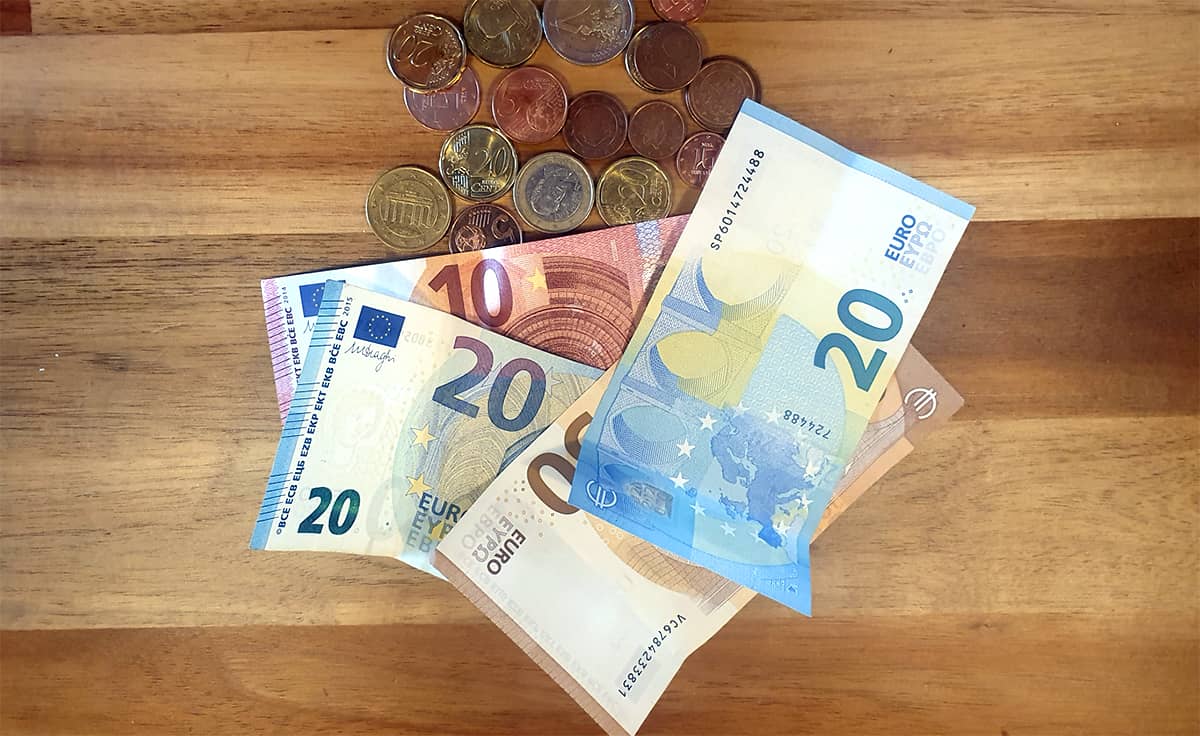
Cash, cards and payments in Croatia
Cards are widely accepted in Croatia, particularly in cities, larger towns and established tourist areas. Hotels, supermarkets, many restaurants, attractions and transport operators commonly accept card payments, but the exact payment methods remain a decision for each business.
When cards are useful
- hotels and many private accommodation providers
- restaurants, supermarkets and larger shops
- museums, attractions and many tour operators
- transport services where the operator accepts card or online payment
When cash is useful
Keeping a modest amount of euro cash is sensible for smaller purchases and as a backup. Cash can still be useful at markets, kiosks, small cafés, some local services and in more remote areas where card terminals may not be available or may temporarily fail.
This is particularly worth considering if you are travelling beyond major centres to places such as the Elaphiti Islands or smaller settlements around Dubrovnik.
How much cash should you carry?
There is no useful fixed amount that suits every traveller. Your need for cash depends on where you are staying, how you travel and whether the businesses you plan to use accept cards. For most trips, cards plus a small euro cash reserve are more practical than carrying a large amount of money.
Contactless payments
Contactless card payments are common in larger shops, hotels and many restaurants. Mobile wallets such as Apple Pay or Google Pay can also work where the merchant accepts the underlying card and contactless payment. Keep a physical card or some cash as a backup.
Card-network acceptance varies
Visa and Mastercard are widely accepted, while acceptance of other card networks can vary by business. If you rely on a less common card, carry a second payment option.
ATMs in Croatia: withdrawing euros and avoiding extra charges
ATMs are easy to find in larger Croatian cities and tourist destinations. Airports, ferry ports, shopping areas, main squares and larger towns normally have several options. On smaller islands and in rural areas, ATM availability can be more limited.
For Dubrovnik-specific locations, see our guide to post offices, banks and ATMs in Dubrovnik.
ATM fees
The total cost of an ATM withdrawal can include a fee from the ATM owner, a fee from your own bank or card provider and, if your account is not in euros, a currency-conversion cost. There is no single standard ATM fee for foreign visitors.
The ATM should show its own charge before you approve the withdrawal. If the fee is higher than you are willing to pay, cancel the transaction and compare another machine.
Bank ATMs and independent ATMs
You will see both bank-operated ATMs and independent machines in Croatian tourist areas. Do not assume that one category always guarantees a particular fee or exchange rate. Check the amount displayed before confirming and compare the total cost when several machines are available.
Decline dynamic currency conversion
If your card account is not in euros, an ATM or card terminal may offer to convert the transaction into your home currency. This is known as dynamic currency conversion (DCC).
Reducing ATM costs
- check your own bank's foreign withdrawal and currency-conversion fees before travelling
- read the ATM fee shown on screen before confirming
- decline dynamic currency conversion and choose EUR
- consider fewer withdrawals if your card charges a fixed fee for each transaction
- keep enough cash for places where another ATM may not be nearby
ATM safety
- cover the keypad while entering your PIN
- avoid a machine if the card reader or keypad looks damaged or altered
- keep the ATM location and operator details if a card is retained or cash is not dispensed correctly
- contact your card provider promptly if you notice an unfamiliar transaction
Exchanging money in Croatia
If your home currency is not the euro, you can exchange cash before travelling or after arriving in Croatia. Banks and exchange offices may offer currency exchange, but rates, commissions and opening hours vary.
Before exchanging cash, check how many euros you will actually receive after all fees rather than relying only on an advertised rate or a "0% commission" sign.
Should you bring euros from home?
Bringing a small amount of euro cash can be convenient for your arrival, but whether it is cheaper than withdrawing euros in Croatia depends on your bank, card and available exchange rate. Compare your own provider's fees before deciding.
Using an ATM instead of exchanging cash
For many visitors, withdrawing euros from an ATM is convenient, but it is not automatically the cheapest option. Compare the ATM owner's fee, your card provider's fee and the currency-conversion terms before confirming the withdrawal.
Exchange offices
Exchange offices are common in larger tourist destinations. Rates can differ between businesses, so check the final euro amount before completing the transaction. Avoid unofficial street exchanges.
Current exchange rates
For reference exchange-rate information, see the Croatian National Bank. Your bank, card provider or exchange office may use a different commercial rate.
Tipping in Croatia
Tipping is not mandatory in Croatia. If you are happy with the service, rounding up the bill or leaving a small additional amount is a normal way to show appreciation.
There is no need to follow a fixed percentage for every restaurant, café, taxi or tour. Some businesses can add a tip to a card payment while others cannot, so carrying a few small euro coins or notes can be useful if you want to leave cash.
Planning your spending in Croatia
There is no reliable single daily budget for Croatia because accommodation, restaurants, transport and activities vary substantially by destination, season and travel style. A summer trip to a major coastal destination can have very different costs from an inland or off-season visit.
Check current prices for the places you actually plan to visit rather than relying on a generic country-wide daily figure. Our destination guides can help with more specific planning for Dubrovnik, Hvar, Rovinj, Split and other Croatian destinations.
Money safety in Croatia
Normal payment precautions are enough for most travellers. The most useful things to check are the currency shown on a card terminal, the ATM fee displayed before a withdrawal and the final amount on restaurant or shop bills.
Check the transaction currency
If a card terminal or ATM offers your home currency, choose EUR unless you have a specific reason to accept the displayed conversion. The home-currency option can include an additional currency-conversion markup.
Review fees before confirming
If an ATM displays a charge you do not want to pay, cancel and compare another machine. Likewise, check the final rate and commission before using an exchange office.
Use official exchange services
Do not exchange cash with individuals on the street. Use a bank, recognised exchange office or another established financial service.
Keep payment cards secure
Use the same precautions you would use elsewhere: protect your PIN, keep your wallet and phone secure in crowded places and contact your card issuer quickly if a card is lost or you notice an unauthorised transaction.
If you need the police, medical help or another public service, keep our list of important and useful phone numbers in Croatia available.
Frequently asked questions about money in Croatia
What currency does Croatia use?
Croatia uses the euro (EUR, €). The euro became Croatia's official currency on 1 January 2023.
Do I need cash in Croatia?
Cards are widely accepted in cities and tourist areas, but keeping some euro cash is useful for smaller purchases, markets, local services and places where card payment is unavailable.
Are ATMs easy to find in Croatia?
Yes in larger towns, cities and tourist destinations. ATM availability can be more limited on small islands and in rural areas, so plan cash withdrawals before travelling somewhere remote.
Should I choose euros or my home currency at an ATM?
Choose euros if the ATM offers a choice. Selecting your home currency uses dynamic currency conversion, where the ATM's conversion provider sets the rate and markup. Choosing EUR leaves any conversion to your own bank or card provider.
How can I reduce ATM fees in Croatia?
Check your bank's fees before travelling, compare the ATM charge shown on screen, decline dynamic currency conversion and consider fewer withdrawals if your card charges a fixed fee for each transaction.
Can I use Apple Pay or Google Pay in Croatia?
Mobile wallets can be used where the merchant supports contactless payment and accepts the card linked to your wallet. Keep a physical card or some cash as a backup.
Should I exchange money before arriving in Croatia?
You do not have to. You can bring euro cash, exchange foreign currency or withdraw euros after arrival. The cheapest option depends on your own bank, card and exchange terms.
Can I pay with US dollars or British pounds in Croatia?
Do not rely on foreign currency for normal payments. Croatia uses the euro, so pay in EUR and exchange or withdraw euros if necessary.