
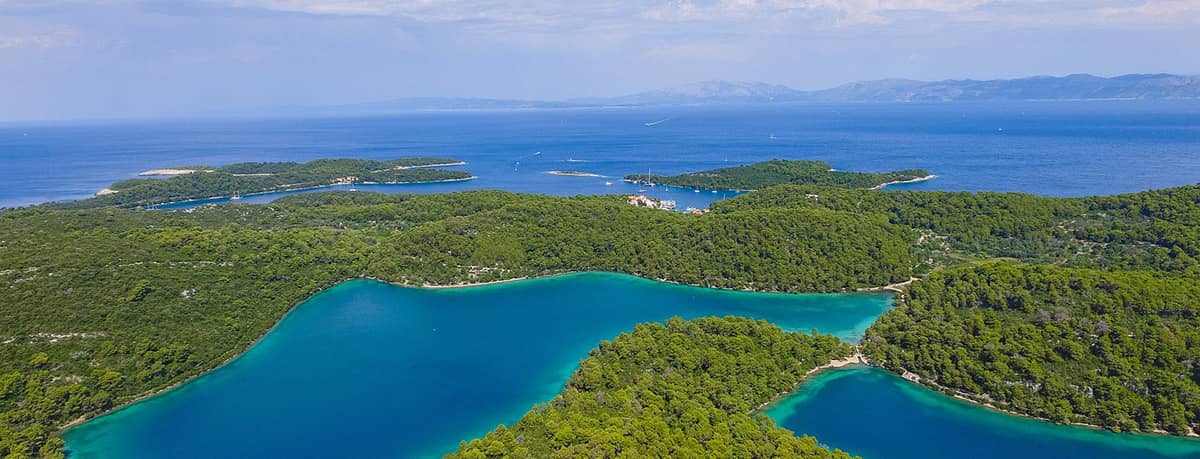
Mljet is the first larger island you reach when travelling north along the Adriatic from Dubrovnik. Often described as Croatia’s greenest island, more than half of Mljet is covered in dense pine forest, with quiet bays, clear water and a relaxed, low-key atmosphere.
The island’s north-western tip is protected as Mljet National Park, Croatia’s first marine national park. Here you’ll find two saltwater lakes, Malo Jezero (Small Lake) and Veliko Jezero (Big Lake), connected to the sea by a narrow channel. In the middle of Veliko Jezero sits the islet of St. Mary with a 12th-century Benedictine monastery, reached by small boats that run regularly across the lake.
For most visitors, Mljet is about simple nature time: walking or cycling shaded paths around the lakes, swimming in warmer, sheltered water, and exploring small villages such as Polače, Pomena, Sobra and Saplunara. You can visit on a long day trip from Dubrovnik or stay several nights for a quieter, back-to-nature break. If you’re planning a day out from the city, have a look at our best day trips from Dubrovnik to see how Mljet fits with other nearby options.
Boat Tour to Mljet National Park & 3 Islands
Discover the beauty of Island Mljet and the Elaphiti Islands with this full-day tour..
This personalized adventure can include visits to the saltwater lakes of Mljet National Park, swimming at Odysseus Cave, and exploring the historic town of Lopud Island. Admission fees are included, allowing you to fully explore these gorgeous natural environments.
How to get from Dubrovnik to Mljet
The easiest way to reach Mljet from Dubrovnik is by fast passenger catamaran to Sobra or Polače, or by car ferry from Prapratno on the Pelješac peninsula. Most travelers either sail directly from Dubrovnik’s Gruž port or drive up the coast to Prapratno and cross from there.
Fast catamaran from Dubrovnik (Gruž port)
In high season there is a daily fast catamaran from Dubrovnik to Mljet, stopping at Sobra and sometimes Polače. The journey from Dubrovnik to Sobra takes about 1 hour, and to Polače around 1 hour 40 minutes. One-way adult tickets are usually around €18-€20 for foot passengers, with slightly lower prices outside peak months. For the full 2025 timetable and detailed price list, see our dedicated Fast ferry from Dubrovnik to Mljet, Korčula, Lastovo guide.
Car ferry from Prapratno (Pelješac) to Sobra (Mljet)
If you are traveling by car, the year-round car and passenger ferry from Prapratno to Sobra is usually the most practical option. The crossing takes around 45 minutes and runs several times a day in high season. As a rough guide, high-season prices for foot passengers are only a few euros each way (around €4-€6), while cars typically pay in the region of €20-€35 per journey, depending on vehicle size. You can see the current 2025 timetable and full price breakdown in our Prapratno - Mljet ferry guide.
Because timetables and fares can change from season to season, always double-check the latest sailing times and prices on our ferry pages before you travel, and arrive at the port at least 30-45 minutes before departure in busy summer months.
Private speedboat tour from Dubrovnik to Mljet
If you prefer a fully flexible, premium way to reach Mljet, you can book a private speedboat or yacht for the day. One of the best-rated options is the full-day Boat Tour to Mljet National Park & 3 Islands. It usually lasts around 9-10 hours and includes pickup in Dubrovnik, a fast cruise past the Elaphiti Islands, time to explore Mljet’s lakes and St Mary islet, plus swimming stops in quiet bays. This works well for small groups who want to turn the journey into a full-day experience rather than just transport.
Getting around on Mljet Island
Once you arrive on Mljet, getting around is fairly simple. The main options are the island bus, taxis and private transfers, renting a car or scooter, and using bicycles or walking for shorter distances and within Mljet National Park. Distances are not huge, but the island is long and hilly, so allow more time than you might expect.
Main island road (D120)
The whole island is connected by the state road D120, which runs from Pomena in the west through Polače, Goveđari and Babino Polje to Sobra and Saplunara in the east. Driving from Sobra to Pomena usually takes around 35-45 minutes, depending on traffic and stops. The road is paved but winding, with some narrow sections, so drive slowly and avoid rushing, especially at night or in bad weather.
Local buses
Mljet has two main bus routes that connect the ferry ports and larger villages. In recent years there has typically been one line running Sobra - Polače - Pomena on the western side of the island, and another line running Sobra - Prožura - Korita - Saplunara on the eastern side. Departures are usually timed to connect with the main ferries, so buses often leave shortly after a ferry arrives and return in time for the next departure. Services are limited compared to the mainland, so always check the current timetable locally (at the port, accommodation or tourist office) and plan with some flexibility.
Taxis and private transfers
Taxis and local transfer companies operate year round on Mljet and are often the easiest way to move between Sobra, Polače, Pomena and Saplunara if you do not have a car. You can usually arrange a pickup in advance through your accommodation or by phone, and in practice many visitors share rides when arriving on the same ferry. For short trips around the national park area, taxis are also useful in hot weather or when travelling with luggage or children.
Renting a car or scooter
In season you can rent cars and scooters on Mljet, especially around Sobra, Polače and Pomena. This gives you the most flexibility to explore beaches, viewpoints and villages at your own pace. As a rough guide, recent prices for small rental cars on the islands in southern Dalmatia have usually started from a few dozen euros per day in low season, with higher rates in July and August. Fuel stations are limited on Mljet, so it is sensible to top up when passing the main settlements and not to arrive on the island with an almost empty tank.
Bicycles, e-bikes and walking
For many visitors, the most enjoyable way to get around the national park area is by bicycle or on foot. In and around Mljet National Park it is easy to rent standard bikes and e-bikes by the hour or day, and there are marked paths around the lakes and through the forest that are suitable for casual cyclists. The typical rental price for a standard bike have been in the range of €15-€25 per day, with e-bikes costing more. If you prefer walking, there are well-marked trails around Malo and Veliko Jezero and up to viewpoints such as Montokuc, but in summer you should start early, carry plenty of water and avoid the hottest part of the day.
Boats inside Mljet National Park
Within the national park area, small boats connect the shores of Veliko Jezero with the islet of St Mary and its Benedictine monastery. Boat rides are usually included in or added to the national park ticket, and run regularly during the day in the main season. This means you can walk or cycle to the lakes, then use the park boats for the final short hop across the water instead of arranging private transport.
Visiting Island Mljet with children
Mljet Island is very children friendly, there is no traffic around the Great Lakes paths, together with other flat areas on the island to explore together with your small ones. During some hot summers there is an increased number off bees on the island, if your child is allergic please make sure to have the appropriate medicine at hand. Ferry tickets can be bought one hour before departure or online, if you are a couple with kids a good suggestion is to have one parent stand in line, there is a nice terrace on the opposite side of the ticket office where the second parent can relax with the kids.
Find out more about Mljet Island and Mljet National Park on Absolute Croatia.
Where to stay on Mljet Island
Mljet is a small and quiet island with limited accommodation, so it is important to book ahead, especially in July and August. Most places to stay are private apartments and guesthouses, with just one hotel on the island. The main areas visitors choose are Pomena and Polače near Mljet National Park, Sobra as the main ferry port, and Saplunara on the far eastern side with sandy beaches. Here are some of our recommendations on Island Mljet Hotels and Places to Stay.
Pomena - best for staying inside Mljet National Park
Pomena is a small harbor village on the western tip of Mljet and the liveliest place to stay within the national park area. It is very close to the saltwater lakes, has several restaurants and bars on the waterfront and is the base for Hotel Odisej, the island’s only hotel. From here you can walk to the lakes in a few minutes, rent bikes or e-bikes and join boat trips, which makes Pomena a good choice if you want everything within easy reach.
Polače - quiet base close to the lakes
Polače lies in a deep sheltered bay just inside the national park zone. It is popular with sailors and travelers who prefer a quieter stay but still want to be close to the lakes and walking and cycling paths. Most accommodation in Polače is in family-run apartments and rooms along the waterfront, with a handful of restaurants and small shops. From here it is a short walk or bike ride to the main park entrance, and boat and excursion services are easy to arrange on the spot.
Sobra - convenient for ferries and moving around the island
Sobra is the main car ferry port on Mljet and a practical base if you are arriving with a vehicle or plan to explore different parts of the island. The village itself is not inside the national park, but it has a local feel, several apartments and a few places to eat. Staying in Sobra works well if you want to keep transfers simple, especially for early-morning or late-evening ferries, and then use a car, scooter or taxi to visit the lakes, Saplunara or other bays during the day.
Saplunara - for quiet sandy beaches
Saplunara is a small settlement on the eastern tip of Mljet, known for its long, shallow sandy beaches and relaxed atmosphere. It is a good choice if your priority is swimming and beach time rather than being close to Mljet National Park. Facilities are more limited than in Pomena or Polače, with a few restaurants and apartments spread around the bay, so Saplunara suits travelers who like a quieter, more independent stay and do not mind driving or taking a taxi to reach other parts of the island.
How many nights to stay on Mljet?
For a quick visit focused on the lakes and the national park, two nights is usually enough. If you also want beach days, hikes and time to explore villages on different parts of the island, plan three to four nights or more. Because accommodation capacity is small and the last ferries arrive late in the day, it is better to book in advance rather than arrive on Mljet hoping to find a room on the spot, especially if travelling with children or in peak season.
How long to stay on Mljet
Mljet works both as a long day trip from Dubrovnik and as a quiet place to stay for several nights. How long you should stay depends on whether you only want to see Mljet National Park or also explore beaches, walking trails and villages across the island.
Visiting Mljet on a day trip from Dubrovnik
A day trip is enough to see the main highlights of Mljet National Park if you plan your ferry times carefully. The usual pattern is to take a morning fast catamaran from Dubrovnik to Mljet, spend the day around Malo and Veliko Jezero, visit St Mary islet and swim or cycle by the lakes, then return to Dubrovnik in the late afternoon or evening. For route details and typical journey times, see our Dubrovnik to Mljet fast ferry guide. If you are choosing between Mljet and other islands for a single day out, it is worth comparing it with the ideas in our overview of the best day trips from Dubrovnik.
Staying 2-3 nights on Mljet
With two or three nights you can see much more than just the lakes. A typical short stay might include one full day in Mljet National Park, a half day at Saplunara or Blace Beach and a trip to Odysseus Cave or a viewpoint such as Montokuc. This is a good choice if you want a slower pace than Dubrovnik, with evenings in small harbors like Pomena or Polače and time to fit in a short hike or bike ride each day.
Stays of 4 nights or longer
If you stay four nights or more, Mljet becomes a proper “switch off” destination. You can alternate days in the park with beach days in Saplunara, explore smaller bays and walking paths, join a boat trip or kayaking tour and still have time to relax on your terrace or by the sea. Longer stays suit travelers who prefer nature and quiet evenings to nightlife, and who are happy to have a limited choice of restaurants and shops compared with larger islands.
Combining Mljet with other Dalmatian islands
Many visitors combine Mljet with stays on other nearby islands such as Korčula and the Elaphiti Islands. One common pattern is to spend a few days in Dubrovnik, add a night or two on Mljet and then continue towards Korčula using the same catamaran line that connects Dubrovnik, Mljet and Korčula. When planning this kind of island-hopping route, always check the latest ferry timetable and consider travelling with hand luggage only to make transfers between ports and accommodations easier.
Beaches, nature and things to do on Mljet
Mljet is known for quiet coves, pine forest, warm saltwater lakes and shaded walking and cycling paths. Most beaches are natural and unorganized, so bring water and sun protection, especially in summer. The main activities are swimming, cycling, walking and exploring Mljet National Park.
Mljet National Park - Malo and Veliko Jezero
The saltwater lakes Malo Jezero and Veliko Jezero are the island’s most popular places for swimming and relaxing. The water here is usually a few degrees warmer than the open sea and calm even on windy days. You can walk or cycle the well-marked paths around the lakes and take the small park boat to the islet of St Mary with its Benedictine monastery. For a deeper overview of the park area, lakes and walking and cycling routes, see the detailed Mljet National Park guide.
St Mary Islet and the Benedictine Monastery
In the middle of Veliko Jezero lies the small islet of St Mary. It is reached by a short boat ride operated by the national park. The 12th-century Benedictine monastery is the highlight, and the islet also has a small café and quiet spots for sitting by the water. Boats run frequently in the main season, allowing you to include the visit easily during a walk or bike ride around the lakes. You can read more about the monastery and island in the St Mary Islet overview.
Saplunara - sandy beaches on the eastern side
Saplunara is known for its long, shallow sandy beaches, which are rare in southern Dalmatia. The main beach has soft sand, clear water and a gentle entry, making it ideal for families. There are a couple of seasonal cafés and restaurants, and several smaller coves can be reached by short coastal paths. As the area is exposed to the open sea, water can be slightly cooler than in the lakes, but you will usually find more space and a quieter atmosphere than at many mainland beaches.
Blace Beach (Limuni Bay)
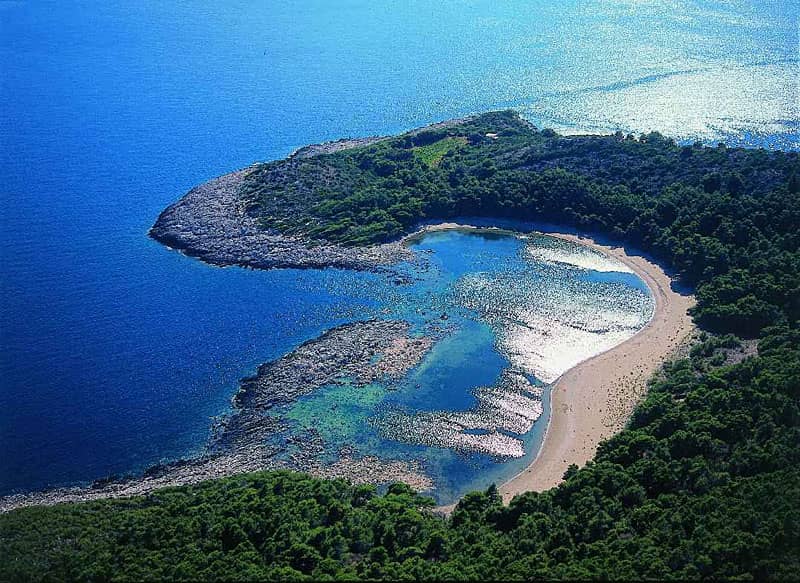
Blace Beach is a wide, sandy arc hidden behind dunes near Saplunara. It is reached by a short walk through pine forest and is more peaceful than the main Saplunara beach. The bay opens to the south and is one of the best places on Mljet for sunsets. Because there are no facilities, bring water, snacks and anything you may need for shade during the day.
Odysseus Cave
Odysseus Cave is a natural sea cave near the village of Babino Polje on the southern coast of Mljet. It is reached by a marked footpath or by boat from nearby coves. At midday the sunlight reflects through the entrance and lights the water a bright blue, making it a popular swimming and photo spot. The path down to the cave is rocky and steep in places, so wear sturdy shoes and avoid going in flip-flops, especially if you are not confident on uneven ground.
Hiking and viewpoints - Montokuc and beyond
Montokuc is one of the best viewpoints on the island and offers wide views over the lakes, forest and open sea. The hike starts near the national park area and climbs gradually through pine forest. In summer, it is best to start early in the morning or late in the afternoon to avoid the heat. Other marked trails lead to smaller peaks and coastal viewpoints, so if you enjoy walking you can easily fill several days with different routes.
Biking around the lakes
Cycling is one of the most enjoyable activities on Mljet. The paths around Malo and Veliko Jezero are mostly flat and shaded, making them suitable for casual cyclists. E-bikes are widely available in the national park area in summer and allow visitors to explore more of the park without much effort. Recent rental prices for a standard bike have usually been in the range of a few dozen euros per day, with e-bikes costing more, so it is worth comparing offers near your accommodation.
Kayaking and swimming
Kayaks and SUP boards are available for rent at several points around the lakes during the season. Paddling is an easy way to explore the quiet coves and get closer to the monastery islet without joining the park boat. Swimming is possible almost everywhere, with some of the warmest water around the shores of Veliko Jezero. If you are staying in Pomena, Polače or Saplunara, you will also find plenty of small rocky or pebbly spots where you can swim straight from the shore.
More things to do near Dubrovnik
If you are staying in Dubrovnik and using Mljet as one of several day trips, it is worth planning your time so that you do not miss other nearby islands and coastal towns. For ideas on how Mljet fits into a wider visit, see our overview of the best day trips from Dubrovnik.
Best Mljet Island Tours, including National Park Mljet !
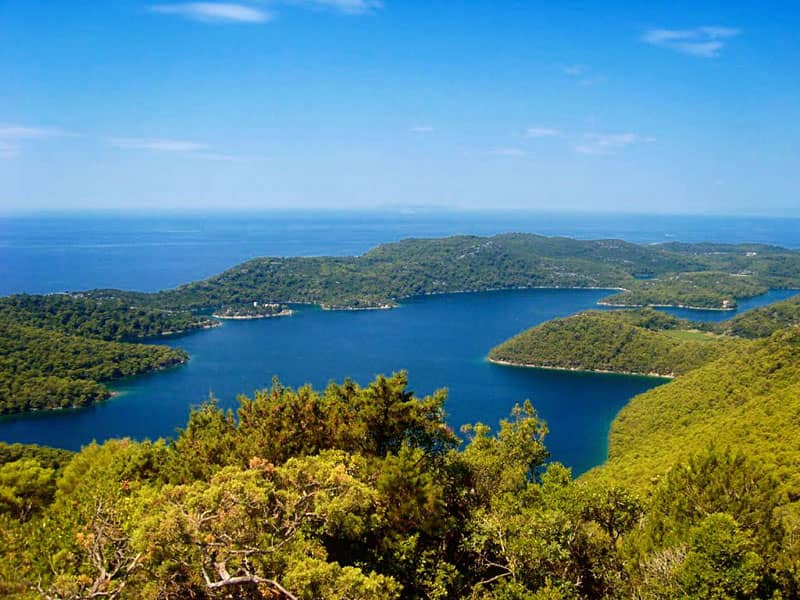
Embraced by pine forests and adorned with crystalline saltwater lakes, Mljet Island also hosts the breathtaking Mljet National Park, a sanctuary of natural splendor.
One of the highlights of Mljet Island is the island of St. Mary, nestled near the southern shore of Veliko Jezero within the confines of the national park. With its rich tapestry of natural beauty and cultural heritage, Mljet Island promises an unforgettable adventure for all who seek to explore its wonders. Find the best Mljet Island Tours & Excursions for 2024.
Mljet island was mentioned under various names in documents from the past: de Melita, de Meleta, da Mlete, de la Melida, da Melta, da Malta, di Meleda and Melitensis. The word Melita/Melite in Greek has the same meaning as the Latin word for honey - mell/mellis, so the name Mljet island comes from the word for honey, as in the past, its woods were inhabited by many swarms of bees.
Mljet National Park tickets and practical info
Mljet National Park covers the whole north-western part of the island, including Malo and Veliko Jezero and the islet of St Mary. To enter the park area and use the marked paths, cycling routes and park boats, you need a valid national park ticket.
What does the ticket include?
In recent years, standard Mljet National Park tickets have usually included access to all marked walking and cycling paths around Malo and Veliko Jezero, entry to the main viewpoints and a return boat ride to the islet of St Mary with its Benedictine monastery. This means that once you have your ticket, you can move freely around the lakes area and simply show it when boarding the park boat. Exact inclusions are listed on the official park price list and may change slightly from season to season.
How much does the ticket cost?
Ticket prices vary by season and category. In 2026, adult tickets bought online cost 15,00 EUR in low season and 25,00 EUR in high season, while the same tickets bought at the park entrance cost 15,00 EUR in low season and 25,00 EUR in summer. Children aged 8-18 and students pay reduced rates, and children up to 7 enter free. A return boat trip to St Mary islet is included with the main ticket, and an additional return ride costs 5,00 EUR. For a full breakdown of current prices and what each ticket includes, see the detailed guide in Mljet National Park - tickets and visitor info.
Discounts on the Mljet National Park entrance fee are also available if you choose to purchase Dubrovnik Pass.
Quick Mljet National Park ticket overview 2026
- Adults (webshop): 15,00 EUR low season (01.01.-31.05. & 01.10.-31.12.), 25,00 EUR high season (01.06.-30.09.)
- Adults (at park entrance): 15,00 EUR low season, 25,00 EUR high season
- Children 8-18 (at park entrance): 5,00 EUR low season, 8,00 EUR high season
- Students (at park entrance): 8,00 EUR low season, 14,00 EUR high season
- Children up to 7 years: Free all year
- Extra return boat to St Mary islet: 5,00 EUR
- Hiking ticket (no boat): 10,00 EUR low season, 15,00 EUR high season
Discounted prices are available for Dubrovnik Pass holders and organised groups according to the official 2026 price list.
Mljet National Park entrance fees 2026
| VISITOR CATEGORY | 01.01. - 31.05. | 01.06. - 30.09. | 01.10. - 31.12. |
|---|---|---|---|
| Entrance ticket for adults bought on webshop | 15,00 Eur | 25,00 Eur | 15,00 Eur |
| Entrance ticket for adults bought at NP Mljet | 15,00 Eur | 25,00 Eur | 15,00 Eur |
| Entrance ticket for children from 8 to 18 bought at NP Mljet | 5,00 Eur | 8,00 Eur | 5,00 Eur |
| Entrance ticket for students bought at NP Mljet | 8,00 Eur | 14,00 Eur | 8,00 Eur |
| Entrance ticket for children up to 7 years | Free | Free | Free |
| Additional return boat ticket to the island of St. Mary (upon presentation of entrance ticket) | 5,00 Eur | 5,00 Eur | 5,00 Eur |
| Entrance hiking ticket | 10,00 Eur | 15,00 Eur | 10,00 Eur |
| Adults DU Pass -30% | 10,00 Eur | 17,00 Eur | 10,00 Eur |
| Children above 8 years DU Pass -30% | 4,00 Eur | 5,00 Eur | 4,00 Eur |
Where to buy Mljet National Park tickets
You can buy tickets on the spot at the official park entrances in Pomena and Polače, at ticket kiosks near the lakes (such as Mali most) and at selected sales points around the island. In recent seasons, tickets have also been available online through the Croatian national parks webshop and the park’s own website. Buying online can sometimes be slightly cheaper and helps you avoid queues at peak times, especially in July and August.
Park entrances and opening hours
The main entrances for most visitors are Pomena and Polače, both close to the saltwater lakes. There are additional ticket points and information spots around the lakes area. Mljet National Park is open year round, but opening hours for ticket offices, boats and information centers are longer in high season (typically from morning until early evening) and reduced in the shoulder and winter months. If you are visiting outside the main summer period, check current opening times on the official park website shortly before your trip.
When is the best time to visit?
The most popular months to visit Mljet National Park are June to September, when the weather is warm and the water in the lakes is at its best for swimming. May and October are quieter but still pleasant for walking and cycling, with fewer people on the paths and boats. If you visit in mid-summer, it is worth arriving early in the day or later in the afternoon to avoid the hottest hours around midday.
How to combine tickets with your ferry
If you are coming on a day trip from Dubrovnik, it is usually easiest to take the morning fast catamaran to Sobra or Polače, buy your park ticket on arrival or online in advance, and then return with an afternoon or evening sailing. Travelers bringing a car on the Prapratno - Sobra ferry can buy tickets at park entrances after driving across the island to Pomena or Polače. For details on how to reach Mljet by sea, see our guides Dubrovnik to Mljet ferry and Prapratno to Mljet car ferry.
Practical tips for visiting Mljet
Mljet is a quiet island with limited services, so a bit of preparation makes your visit smoother. Shops, restaurants and transport options are available, but not in every village, and opening hours vary by season.
Shops and groceries
Small supermarkets and mini-markets are found in Sobra, Polače, Pomena and Babino Polje. They usually carry basic groceries, snacks, drinks and beach items. Selection is more limited than on the mainland, so if you are staying in an apartment it can be useful to bring specific items with you from Dubrovnik. Shops generally close earlier outside high season.
Restaurants and cafés
Most restaurants are located in Pomena, Polače and along the waterfronts near the national park. Menus typically feature local fish, seafood, pasta and simple Dalmatian dishes. In Saplunara you will find a few beach-side places open in summer. Reservations are rarely needed except on peak July and August evenings.
ATMs and payments
ATMs are available in several larger villages, including Sobra, Polače and Pomena. Card payments are widely accepted in restaurants and accommodation, but small cafés, beach bars and bike rental stands may only take cash. It is a good idea to withdraw some euros before arriving at remote beaches or heading into the national park for the day.
Weather and temperatures
Mljet has a typical southern Dalmatian climate with hot, dry summers and mild winters. From June to September daytime temperatures often reach the high 20s or low 30s Celsius, and the lakes are usually warm enough for swimming from late spring to early autumn. In shoulder months, mornings and evenings can be cooler, especially near the water, so bring a light jacket.
What to pack
For summer visits, bring sun protection, a hat, plenty of water, comfortable walking shoes and swim shoes if you plan to explore rocky coves. If you are hiking to viewpoints such as Montokuc, trainers or light hiking shoes are recommended. A small backpack is useful for carrying water and snacks on lake walks or trips to beaches without facilities.
Parking and driving
If you arrive by car, you will find parking areas near the national park entrances in Pomena and Polače, at Saplunara beach and along the main villages. Parking is free in many places, but in peak season some areas near the lakes may charge a small fee. Roads are narrow and winding, so drive slowly and be patient when meeting oncoming vehicles.
Cycling safety
The lake paths in the national park are mostly flat and safe for casual cycling, but the main island road has tight bends and limited shoulder space. If cycling outside the national park area, be cautious when sharing the road with cars, especially in summer when traffic increases.
Mobile signal and internet
Mobile coverage on Mljet is generally good, but can be weaker in deep bays and forested areas. Most accommodations offer Wi-Fi, though speeds vary. If you need reliable internet, consider using mobile data while on the island.
Medical help and emergencies
Mljet has a small medical clinic, with larger medical facilities available on the mainland in Dubrovnik. Pharmacies are not present in every village, so bring any medication you might need. In an emergency, call the European emergency number 112, which connects you to local services.
When to visit Mljet
Mljet can be visited year round, but the experience varies a lot by season. The most popular months are June to September, when the lakes are warmest and all services are open, but shoulder seasons can be quieter and more comfortable for walking and cycling.
June to September - best for swimming and beach time
Summer is the most popular period to visit Mljet. Daytime temperatures are high, the lakes are warm and calm, and all restaurants, rental shops and island services operate on full schedules. July and August are the busiest months, so arriving early in the morning helps you avoid the hottest hours and the largest crowds around the lakes.
April, May and October - ideal for walking and cycling
Spring and early autumn bring mild temperatures, quieter paths and good conditions for walking, hiking and cycling. Most services in Pomena and Polače are open from late April, and the weather is usually settled. The lakes are cooler than in midsummer, but many visitors still swim on sunny days. Ferry timetables are more limited than in July and August, so plan arrival and departure days carefully.
November to March - very quiet, limited services
In winter Mljet is peaceful and best suited to travelers looking for nature and solitude. Some restaurants and rental shops close, and accommodation options reduce, but the island’s walking paths remain open and the weather is mild compared with inland Croatia. If visiting in winter, check ferry schedules for the exact day you plan to travel, as departures are reduced and connections may not operate daily.
Best time for a day trip from Dubrovnik
If you are planning a day trip, choose a month with reliable ferry connections and longer daylight hours. Late May, June, September and early October are ideal, offering good weather, comfortable temperatures for walking and easier boarding on ferries than in peak summer. For ferry routes and typical journey times, see our Dubrovnik to Mljet ferry guide.
Frequently asked questions about Mljet
Is Mljet worth visiting?
Yes. Mljet is one of Croatia’s most peaceful and scenic islands, known for its warm saltwater lakes, pine forest, quiet beaches and relaxed atmosphere. It is especially popular with travellers looking for nature, swimming and easy walking or cycling routes.
How do you get to Mljet from Dubrovnik?
The easiest way is by fast catamaran from Dubrovnik’s Gruž port to Sobra or Polače. The journey usually takes around 1 to 1.5 hours. You can also take the car ferry from Prapratno on the Pelješac peninsula to Sobra. For timetable details, see our Dubrovnik to Mljet ferry guide.
Can you visit Mljet on a day trip from Dubrovnik?
Yes. A day trip is enough to see the saltwater lakes, walk or cycle part of Mljet National Park and visit the islet of St Mary. Take a morning fast ferry from Dubrovnik and return in the late afternoon or evening for a full, relaxed day.
Do you need a ticket to visit Mljet National Park?
Yes. A ticket is required for the Malo and Veliko Jezero lake area and the boat to St Mary islet. Tickets can be bought at entrances in Pomena and Polače or online. In recent seasons, adult high-season tickets have usually been in the mid-teens of euros.
How long do you need on Mljet?
Most visitors stay one to three nights. A day trip covers the lakes and St Mary islet, two nights add beaches and short hikes, and a stay of three nights or more gives enough time for Saplunara, Odysseus Cave and quieter parts of the island.
Where should you stay on Mljet?
Pomena is the best base for easy access to the lakes and restaurant choices, Polače is quieter but close to the national park, Sobra is convenient for ferries, and Saplunara is ideal for sandy beaches. Accommodation is mostly in apartments and guesthouses.
What is the best beach on Mljet?
Saplunara and Blace Beach are the best sandy options, while the warmest water is usually found in the sheltered coves of Veliko Jezero inside Mljet National Park. Most beaches are natural, so bring shade and water.
How do you get around Mljet without a car?
You can use the local bus lines, taxis, bike rentals and walking paths. Around the lakes, cycling and walking are the easiest ways to move between viewpoints and the boat departure points.
Is Mljet good for families?
Yes. The calm saltwater lakes are ideal for children, paths are shaded, and Saplunara’s shallow sandy beach is very family-friendly. Bring snacks and water, as facilities vary by area.
Can you swim in Malo and Veliko Jezero?
Yes. Swimming is allowed everywhere around the lakes except near boat piers. The water is usually warmer than the open sea and calm even on windy days, making it perfect for relaxed swimming.
When is the best time to visit Mljet?
June to September is best for swimming and beach time. May and October are ideal for hiking and cycling with fewer crowds. Winter is very quiet with limited services, but good for peaceful walks.
Are there ATMs and shops on Mljet?
Yes. ATMs are found in Sobra, Polače and Pomena. Small supermarkets operate in most larger villages, but selection is limited compared with Dubrovnik, so bring specific items if staying in an apartment.