
Dubrovnik culture is a mix of UNESCO listed heritage, centuries of literature and art, and a living tradition of festivals, music and everyday cafe life in the Old Town.
Dubrovnik culture at a glance
- Historic Old Town protected by UNESCO, with churches, palaces and stone streets shaped by the former Dubrovnik Republic.
- A strong literary and artistic tradition, with poets like Ivan Gundulić and dramatist Marin Držić still celebrated today.
- World class museums in Dubrovnik and art galleries that show everything from medieval painting to contemporary art.
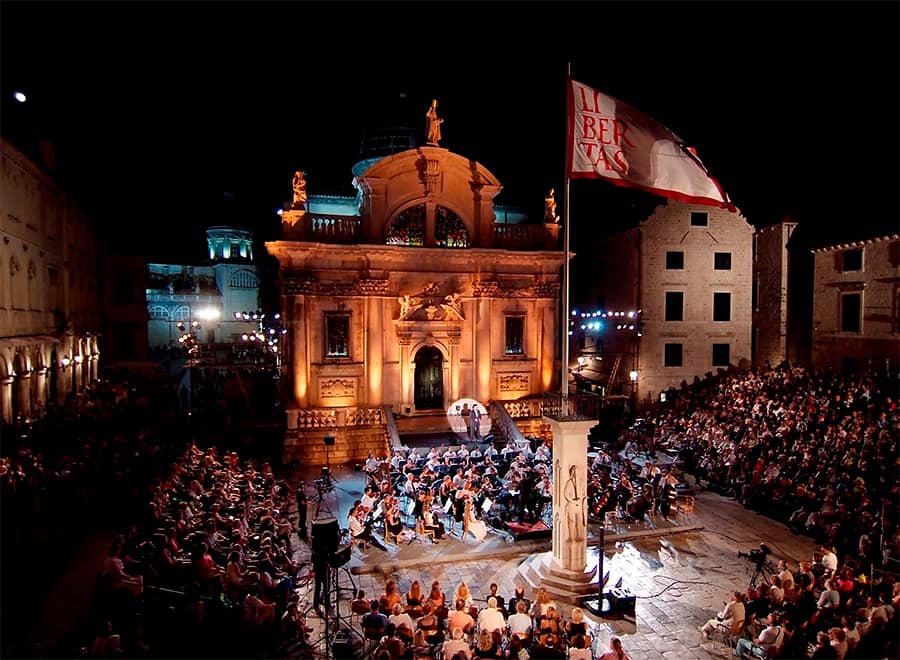
- Major cultural events like the summer long Dubrovnik Summer Festival and the February St Blaise Festival.
- Everyday culture in cafes, markets and neighborhood squares, best experienced by simply walking the Old Town and its side streets.
Many forms of artistic expression flourished during the long and rich history of Dubrovnik.
Beyond the city: culture on day trips from Dubrovnik
If you have more than a day or two in Dubrovnik, it is easy to combine the city’s cultural sights with visits to nearby islands and villages. Many excursions include historic churches, small museums and traditional food. For ideas see our guide to the best day trips from Dubrovnik.
The Dubrovnik literature experienced its renaissance "rebirth" in the 15th and 16th century, when many immortal works of literature were created. Emerging from life in Dubrovnik and created to amuse, provoke, cry and laugh, Dubrovnik literature developed from the people.
The Dubrovnik Rectors, regarded as the best-educated citizens of Dubrovnik of that time (Dinko Ranjina, Dominiko Zlatarić, Ivan Gundulić and others), created immortal poems about their beloved city of Dubrovnik.
The city of poets, writers and scientists
Ivan Gundulić, the greatest Croatian 17th century writer, predicted the downfall of the great Turkish Empire in his great poem Osman. As freedom was regarded as the greatest value to Dubrovnik, he wrote these immortal verses that are performed till today on every opening of the world famous Dubrovnik Summer Festival:
" O you beautiful, o you dear, o you sweet freedom… all the silver, all the gold, all human lives, can not pay for your pure beauty…".
Many other poets and writers, among them Marin Držić and Ivo Vojnović created numerous works about the glory and everyday life of Dubrovnik. Their literature still lives and is very relevant even today. Don't miss to experience the plays; many of them are performed during the Dubrovnik Summer Festival.
How to experience local culture in Dubrovnik
You do not need specialist knowledge to enjoy Dubrovnik culture. Most visitors experience it simply by combining a few classic sights with local events and everyday life in the Old Town.
- Walk through history: Start with the main landmarks and monuments in Dubrovnik to understand how the former Republic shaped the city.
- Visit key museums and galleries: Choose a few highlights from our guide to museums in Dubrovnik and explore the art galleries that show local and international artists.
- Plan around events: If you visit in summer, check dates for the Dubrovnik Summer Festival. At other times of year look at our overview of events in Dubrovnik to see what is on.
- Watch folklore and live music: Performances of traditional dances and klapa singing often take place during festivals and smaller events. They are an easy way to see local costumes, music and dance on stage.
- Enjoy everyday life: Sit in a cafe on Stradun or a quieter side street, visit the local market and try regional food and wine. This everyday rhythm is an important part of Dubrovnik culture.
- Combine culture with sightseeing: Many of the most popular things to do in Dubrovnik also have a strong cultural element, from city walls walks to visits to historic churches and palaces.
Other famous citizens of Dubrovnik include the painter Vlaho Bukovac, the mathematician and astronomer Marin Getaldić, the composer and author of the Croatian first symphony Luka Sorkočević and the scientist Ruđer Bošković.
Find all the upcoming events happening in Dubrovnik.
Dubrovnik Painting School
Through centuries Dubrovnik was the cradle of many famous painters. Little of the riches, created in both the famous and unknown paint shops, beginning with the frescos in the pre-romanic churches in the 11th and 12th century, to the greatest pieces of art by Ivan Ugrinović, Blaž Jurijev, Lovro and Vicko Dobričević, Nikola Božidarević and Mihailo Hamzić in the 15th and 16th century, is preserved. Many great works of art disappeared or were plundered during the centuries in fires, earthquakes and other disasters. From the remaining works it is obvious that Dubrovnik had great painters, artists with immense talent and skill that rightfully established them in the painting history of Europe under the name of The Dubrovnik Painting School.
The most recognized representatives of the Dubrovnik Painting School were Lovro Dobričević and his son Vicko Dobričević (Vicko Lovrin), Nikola Božidarević (the son of the painter Božidar Vlatković) and Mihajlo Hamzić.
From Lovro Dobričević, 15th century, three works are preserved: the Poliptih in the Dominican Monastery, Poliptih in the St. Mary church on Danče and parts of the Poliptih (St. Blaise portrait) in the Franciscan monastery, all in Dubrovnik.
From Blaž Jurjev Trogiranin, 15th century, there is the painting of Madonna in the St. Durđa church on Boninovo and a painted crucifixion in the Franciscan monastery in Ston.
From Ivan Ugrinović, 15th century, only the Poliptih in St. Antun church on island Koločep is preserved.
From Vicko Dobričević, 16th century, only the Poliptih in the Franciscan monastery in Cavtat is preserved.
From Mihajlo Hamzić, 16th century, who was educated by Andrea Mantegne in Italy, only two pieces of art are preserved; The baptism of Christ in Rectors Palace and the Triptih Lukarević in the Dominican monastery in Dubrovnik.
From Nikola Božidarević, regarded by many as the greatest talent among these painters, only four pieces of art are preserved; the Triptih Bundić, the paintings Navještenje and Sacra conversacione ( all three located in the Dominican monastery), and the Poliptih in St. Mary church on Danče, his last and, by many, most beautiful work. (Danče is the name for a small part of Dubrovnik located just outside the city walls where the church is located).
The sudden death of these painters, that happened from 1517 till 1520 marks the drastic end of a great era of the Dubrovnik painting school, an era that enriched the cultural heritage of the world.
Dubrovnik, as one the centers of art on the Mediterranean, had already in the 14th century many foreign masters working in it, mainly from Italy. They were all invited by the government of Dubrovnik to paint on the churches and other monuments in Dubrovnik.
The naval power of Dubrovnik
The history of Dubrovnik is directly connected with the history of its navy. The Dubrovnik Republic and its government managed to use its closeness to the Sea in the best possible way, ensuring growth and freedom during centuries. Without its naval power, Dubrovnik would probably have never become one of the most important cultural and merchant centers on the Mediterranean, especially from the 16th to 18th century.
The beginning of the Dubrovnik navy can be traced back to the 9th century and it reached its highlights between 1580 and 1600. In that time Dubrovnik merchant navy had more than 200 ships that sailed all the seas. Numerous documents testify about the merchant industry in Dubrovnik, since the laws of the Dubrovnik Republic required that every ship had to have a writer. That way, all information's were archived, showing ownership contracts, names of the captains, information's about the ports etc. The diplomacy skills of the Dubrovnik Republic are unique in the naval world history. Business was conducted under very favorable conditions with numerous countries along the Mediterranean, turning even enemies into trading partners.
The greatest rival in those times was Venice, as Dubrovnik stood in its way for the complete domination on the Mediterranean. From open conflicts to the recognition of the sovereignty of Venice over Dubrovnik that lasted for 150 years (13th - 14th century), Venice remained a threat for the prosperity and freedom of the Dubrovnik Republic. All efforts were directed towards using all available means to protect and defend the Republic from Venice. Even during its complete financial breakdown due to the Great earthquake in 1667, ruined and devastated, the diplomacy skill of the Dubrovnik Republic managed to prevent Venice from conquering Dubrovnik. The Venetian fleet approached Dubrovnik under the excuse that they only wanted to help, but in reality just waiting for a chance to enter and conquer Dubrovnik.
Records say that the Dubrovnik citizen Nikolica Bunić managed to prevent the Venetian, sending their ships back with help of only diplomacy. The tale tells that, when the Venetian fleet arrived outside Dubrovnik at the 17th April 1667, a Dubrovnik ship crossed their way, stopping them. On that ship there was the representative of the Republic Niolica Bunić, the only survived senator after the big earthquake. Bunić stepped on deck of the Venetian commander's vessel and gave him the following greeting:" In the name of the Rector and the Dubrovnik Republic Senate", even if in that moment Dubrovnik did not have either a Rector or a Senate. Assured of an easy conquer, the Venetian commander Cornaro cordially accepted the representative of Dubrovnik. But his surprise was great when, while expecting words of surrender, he was meet by :" Welcome to the water of the Republic". The astonished commander Cornaro could not do much but to continue in the same style :
" the Duke has send me to offer help and assistance against the Turkish army and other plunderers "
Bunić thanked the commander with the remark:" the government of Dubrovnik has enough power to prevent any attempt of foreign intrusion and, regarding the help connected with the earthquake, the republic has already taken all necessary measures, but many thanks to the Duke of Venice for his concern..."
Not less determined and skilled was Marojica Kaboga under the negotiations with the Turkish Pasha who also approached Dubrovnik to, as he sad :" conquer Dubrovnik before the Venetian". The hard negotiations and suggestive persuasions, under whom this young man showed his great talent, took long time before the Turks finally withdrew their forces.
With this the danger for Dubrovnik's well-being was not over. Soon after, threatening to conquer Dubrovnik, a ransom of 150 000 ducats was demanded by the Turkish Pasha. A delegation team, led by the experienced Nikolica Bunić, was send to the negotiations. According to a protocol that is preserved in the archive of Dubrovnik he was, prior of departing, instructed the following:
" Promise nothing. You can not give anything". You must stay against everything. Your Republic looks to you. Maybe you will die, but it will be a honourful death, and your country will remain free".
The fact is that Bunić, after several months of negotiations, indeed did die in the Turkish prison. Dubrovnik paid nothing and remained free.
Around 1800 the Dubrovnik Republic had a highly organized network of consulates and consular offices in more than eighty cities and ports around the world. In 1880 Dubrovnik acquired its first steam ship and from that time a new era of Dubrovnik shipping begun.
Frequently asked questions about Dubrovnik culture
What is Dubrovnik best known for culturally?
Dubrovnik is best known for its UNESCO listed Old Town, a long tradition of literature and painting, and major cultural events such as the Dubrovnik Summer Festival. The city’s churches, palaces, museums and everyday cafe life all reflect this heritage.
Where can I see traditional music and dance in Dubrovnik?
Traditional performances often appear in the program of the Dubrovnik Summer Festival and other events listed in our overview of events in Dubrovnik. Folklore groups and klapa singers sometimes perform on squares and at special concerts during the main season.
How much time do I need for Dubrovnik’s main cultural sights?
Most visitors can see the main churches, palaces and a couple of museums in one full day, but you will need two or more days if you want to explore galleries, attend an evening performance and still have time to enjoy the Old Town at a relaxed pace.